Tuesday, June 7, 2022

Organized Play, Part Two

 I spent a couple years involved, in small ways, with D&D Adventurers League.

It started during Season One; I had run a con the previous year that had Pathfinder Society games, and for year two, it made sense to include a bunch of the "new hotness" - 5e, by way of DDAL.  So we ran some games, they were successful, everyone was excited.  There was a lot of DDAL springing up that first year, and it was good to get in on the ground floor with the local folks who were getting into it and feeling it out.  Some nice people.

For a while I ran occasional DDAL sessions at the FLGS.  These went well, they were getting a good group going there, and I was just a sometimes DM.  Based on a look at the adventures I know I ran, this must've been Season One through the very beginning of Season Two.  I can tell you for sure I ran Dues for the Dead, The Courting of Fire, The Scroll Thief, Drums in the Marsh, and Tales Trees Tell at the FLGS, I have vivid memories of DMing that sequence.  I would still be interested in talking to Jobe Bittman about the bits that WotC cut out of The Courting of Fire.

I didn't love DDAL.  To be fair, I wasn't in love with 5e, either, but it was functional and a way to meet some new folks and maybe generate new gamers, so I was willing to put in some work.  The org-play structure of DDAL wasn't horrible, either... but the culture started to be its own thing.

It wasn't really apparent to me until later, because I stopped running games.  I could see from peeking in on the online discussions that DDAL was getting a little weird as far as playculture.  Org-play does this - it becomes its own thing, and the loudest voices will skew the idea of "normal" play.

By Season Five I was running again, and I ran the entire low-level sequence that season, including at an out-of-state con.  That was fun!  Again, everybody I met was pretty cool there.  Got to play in The Iron Baron epic, that was interesting - anytime you do a multi-table thing, it's interesting to watch the logistics.  That adventure earned my dwarf paladin the enmity of all fire giants forever!

Later at TridentCon I ran a higher-tier adventure and hated it - the weird habits the playculture was building were really obvious at that level, I don't think I had any fun running that session of In Dire Need.  I went on a business trip to Ottawa and sat in on a game at a FLGS there, and those players were hospitable and fun to share a table with.  The main issue I had with DDAL, people-wise, was some of the online loudmouths, some of the moderators and admins, and a handful of people on the local 'scene' who were cheesy, mouthy, or both.  Probably all organized play is this way.

I remember playing at a local con - this was Season Seven I think, so I'm skipping ahead - and my PC was killed.  Actually killed, no resurrection, due to a quirk of that season and the way in which he was slain.  The table went silent as everybody expected me to freak out, I guess.  I didn't freak out, I was losing characters before some of these players were born, right?  I hung out for the rest of the game, other than sneaking across the street to buy everybody at the table Wendy's Frosties.  When you lose a PC, you either drink beer or eat ice cream.  Ice cream it was.

Worth noting that in my experiences in DDAL, "faction stuff" didn't come up too much.  Occasionally it got a player a side-quest or extra info, but there wasn't much effect on the way people were playing their characters.

During Season Five, we worked with DDAL admins to write a 'Con-Created Content' adventure for use at TridentCon.  It was supposed to be a trilogy - con trilogies were very popular at the time - but that ended up being too ambitious.  I did the story outline, Jack Shear did the actual writeup, then I took an editing pass for clarity, sanity-check, and to drop in some Forgotten Realms references where we could use more.  That Poe homage adventure, The House on Weeping Quay, was eventually approved for play.  It had been changed by the DDAL reviewers a smidge from what we submitted, and surely what we submitted was dialed-back from what I originally wanted, but it was ready to go.  The map was jacked up at the time, but we forged ahead.  

I ran The House on Weeping Quay for the DMs who were going to run it at TridentCon, and I think it went okay.  A couple questions came up, we figured out how we were going to run those bits, and so forth.  At the con, the module was run I think four or five times for different tables.  And never run again.  Why?  Well, although we were allowed to publish the dumb thing through DriveThru, I didn't get proper maps done in a timely fashion for first possible release, and then after some delays it dawned on me that I didn't care about potential DDAL sales.  Would I rather put the adventure out the way it was supposed to originally look?  With some extra content?  With the original heckin' cool magic item that DDAL wouldn't allow?  And if I were going to revise it, did it even need to be 5e?  Would I be better off publishing it as an OSR thing?  It's still sitting there, waiting for a final edit and an updated manor house map.  I could put it out quickly if I had a map, I guess, and were content to release the "original DDAL version", even if it were no longer approved for DDAL play.  Nobody's clamoring for it, that's for sure.

That was the end of my DDAL career, I haven't touched it since Season Five.  Well, that's mostly true - I was briefly involved with a DDAL splinter campaign, and it was a painful couple of months.  We'll take a look at that next time we talk about organized play.


Saturday, June 4, 2022

Game Jamming

Not long ago I participated in a "game jam" focused on OSR stuff.   I like community stuff when I have the time to participate, I sometimes like writing under time (or subject matter) pressure, and I figured why not - so I went for it.

My contribution was Vague Elephant Project, which has some elephant-themed monsters and spells of a Wampus mien.  It's free on itch.io, or you can find it on DriveThru in a pay-what-you-want status.  I must credit the game jam with shoving me out of a writing lull.  I don't know that I'd hurry to do it again, though - I didn't see authors talking to each other about submissions, cross-pollenating etc, and I wish it resulted in more downloads and comments than it did.

The submissions for the jam were a mixed bunch - as is rather the point, I think, to encourage people to contribute and create in ways they previously hadn't.  Of the submissions, I want to call out The Queen of Decay and Walkers & War-Wagons.

The Queen of Decay by Brian Rideout is a very nice adventure which you could drop into any swamp region in your home campaign.  Brian does a fine job of giving us an ongoing situation (Oneera the dream priestess kidnapped by Volara the witch) and plopping it amidst some good swamp hexes that are worth plopping on your map.

Every NPC has motivations and likes/dislikes.  Much of the stuff here is linked to lore from the World of Weirth campaign setting, but explained quickly in sidebars (I don't have the cult of Yig-Noss in my world, but I can see it's an evil snake cult, and I certainly have one of those).  While the default tone is sword-and-sorcery, you could squint and read it all as fairy tale as well.

Walkers & War-Wagons by Mr. Triceratops is a brave attempt at vehicle rules for OSR systems, in particular post-apoc/sci-fi vehicles (cars, mechs, aircraft) for the in-progress Red Ares game.  I have no idea if the rules work well in play, but it's an admirable attempt - perhaps more influenced by non-old-D&D than I would like, but that's me.  Triceratops uses damage reduction for vehicular armor, for example.  Also STRICT SPEED RECORDS MUST BE KEPT.  I want to hear more about how this works in play, bolted on to some other system.

Head over to that game jam page and download whatever looks interesting - that's the point.


Wednesday, June 1, 2022

Get Resurrekt

 Farting around with AD&D content generation!


 Over on the Twitter, Aaron the Pedantic asserted that resurrection in AD&D was more prevalent than in the Appendix N literature that inspired it.  That seems true enough to me given that AD&D even HAS resurrection in it.  Which Appendix N material has a straight-up “resurrection by priest” in it?


But the conversation gave me the impression that Aaron, and perhaps others, think resurrection is as common in AD&D as it seems to be in some later editions.  I don’t think it is - purely the gut talking here.  I can’t remember any resurrection in any of my AD&D games going all the way back; nary a one.  I remember one time the party had to settle for a reincarnation, and that was a huge deal at the time.


Skip over the lower-level raise dead for the moment, which is great and all, but you need a fresher corpse. Let's stick with resurrection, since that's the verbiage we were using in the Twit thread. Resurrection is a seventh-level spell, so you need a 16th-level cleric with 18 WIS to cast it (PH20). Presuming you don’t have an 16th-level cleric in your party, how do you even get access to a resurrection spell?


You can't encounter a 16th-level cleric in a dungeon unless you're on the 16th level (or lower), per DMG175.


Seems like you’re better off finding a suitable cleric on the overland map.  Maybe you know of one, in the big city in your campaign.  I hope you do, because coming across a friendly resurrection-capable cleric while exploring the wilderness is extremely unlikely.  Again, I’m just farting around here, and welcome commentary and picking-apart of any of this.


Chance a space/hex includes a castle: 3% (per DMG173, Random Wilderness Terrain)

Chance an uninhabited area has a fortress: 5% (per DMG182, Outdoor Random Monster Encounters)   These seem like parallel methods; let’s default to the higher chance for our purposes here, 5%.


DMG183, castle size influences chance of “character type” inhabitants thusly:

small  30%

medium  35%

large  40%


But also have Humans result thusly (sending us to the Monster Manual for details):

small 10%

medium  15%

large  20%


Only four kinds of humans can be in that castle; let’s presume we’re rolling a 1d4 here and there are equal chances of the four.


Bandits can only have 5-6th level cleric

Brigands, same

Berserkers, 7th level

Dervishes do much better, up to 12th level, but that won't hit the mark.


DMG184, if it’s a “character-type” castle, chance of a cleric is 18%.


This cleric is of level 9th-12th.  Call it a 50% chance of having a character of 11th level or higher.


In order to have access to resurrection, the cleric must be 11th level and have the capacity to cast 7th-level spells (requiring 18 WIS, but note that NPC clerics get a +2 WIS; let’s presume for the sake of this investigation that any given 11th level cleric has 18 WIS).


Taking even the most generous spreads, that’s:


5%, 40%, 18%, 50%.  That’s a .0018 chance of a given hex containing a cleric capable of casting resurrection on behalf of suitably-aligned PCs.


Am I gaming this out right?  Do you actually have a better chance of finding a Dervish fortress in the wilderness than you do an other-cleric-owned castle?  That’s pretty interesting by itself.


Permanent death in the unexplored wilderness awaits!


Tuesday, May 31, 2022

Starling & Birch

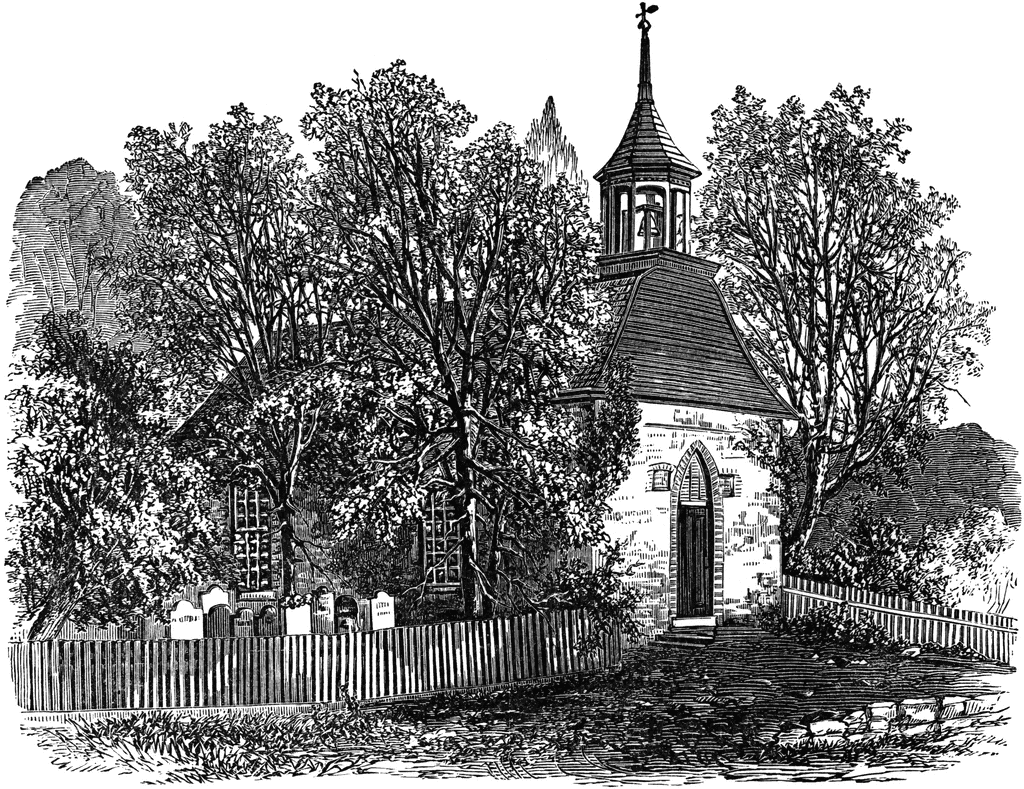
 Out beyond Flower-Town you'll eventually come upon a village that some folks call Two Churches; others refer to the place as Starling-Town, or Birchville, and that's the crux of the problem.

Two Churches was founded when a wagon train of settlers, trudging through scrub hills, beleaguered and heel-bitten by gnoll raiders for days, came upon a flourishing birch tree with a big fat starling in its branches.  Taking it as a sign of arable land and the potential for rain, they settled (that's what settlers do).  Unfortunately, the two clerics on the wagon train had different interpretations of the miracle: one thought the tree more significant, and the other, the bird.

Now, forty years later, Two Churches is exactly that - a village with two near-identical churches, one at either end of the main street.  The two congregations don't even disagree with each other on much, save the bird/tree conundrum, but they've spent four decades backbiting (politely) and trying to poach one another's parishioners.  At times it got contentious, but thankfully it's never yet escalated to violence; currently there is a truce, some unwritten rules, and general peace.  At least, until some strangers wander through and screw it up (that's what strangers do).

In the center of town lies a cleared spot where once there had been plans to erect a statue of the tree with the bird in it.  Predictably, squabbles began about the relative size of the birch and the starling, and about how they should be colored and detailed...and the project was abandoned.  The blank space is considered slightly-holy by the townsfolk, and nobody walks on that circle of grass.  Perhaps someday, they'll come to agreement and get that statue.

At the north end of town is the Church of Perpetual Hope, a steepled wooden structure in white with blue shingles run by Father Ignatius Rompers (Lawful fifth-level cleric).  Ignatius, a pointy-nosed man in his sixties, wears his beard bushy and his hair slicked straight back with the aid of a cheap pomade that smells like a hospital.  His beady grey eyes cast suspicion wantonly around the room, uninvited, but so powerful is his air of derision that he causes people to remember something minor they did wrong years ago.  Ignatius resents Father Carl's cheerful nature and considers it all a big put-on - nobody could be that happy, it's all a work.  Father Ignatius is unmarried but of late is considering his chances with the widow Dank. (1)  Ignatius is a respectable, skilled cleric of Law who could likely teach a cleric a bird-themed spell or ritual.

At the south end of town sits the Church of Everlasting Aspirations, a steepled wooden structure in white with green shingles run by Father Carl Hardskiffle (Lawful fifth-level cleric).  Carl is portly, bespectacled, and sausage-fingered; his few remaining wisps of white hair leap outward from his shiny pate like dandelion seeds.  Always ready with a laugh, Father Carl is a skilled dobro player, and knows many popular songs (including "The Potbelly Mining Disaster" and "Under Lulubelle's Sundress").  Carl was once married, back in his adventuring days, but his wife left him after a caper Carl refers to as The Affair Of The Mummy's Curse (whether he means this to indicate that his wife cheated on him with a mummy is still unrevealed).  In his youth, Father Carl was a fighting-cleric who served as an acolyte under the famous Father Cornelius (who fought at Cenotaph Canyon and later came out of retirement as an elderly man, started adventuring again, and was tragically killed at a jousting tournament).  One of Carl's prizes from that time yet hangs in his cedar closet: an enchanted buckskin jacket of free action, stunningly beaded in the style of the Red Sky People (2).  Carl is an affable, gregarious cleric of Law who could likely teach a cleric a plant-themed spell or ritual.

Visitors to the town will likely be wooed by both congregations, in hopes of getting them to sign "the book" as non-resident parishioners and giving one church a meaningless numbers advantage (until the next group of strangers pass through).  Friendly townsfolk will accost visitors at the stables, or at the lobby of the Blueberry Hotel (really more of a low-rent inn), offering anecdotes on how "nice" their church is.  Most will not denigrate the other church directly - after all, they have friends in that flock, or perhaps they themselves were once a member.  It's a war of niceness.  A visitor who is convincingly torn between the two equally-appealing options will find himself invited to a string of spaghetti dinners and bingo nights without end, as the Starling and the Birch attempt to woo him.  And if he drops hints about possibly building a home in town, and becoming a resident?  Palpable escalation!  Non-resident parishioners are all well and good, saving souls and all that, but the prestige of tilting the accounts by adding a real-life, gonna-live-here parishioner?  It would be the talk of the town for days.

Everyone in Two Churches suspects that one day - possibly soon given the ages of the good Fathers - only one cleric will remain, and the churches will unify.  Due to the truce, neither cleric has taken on an acolyte, so nobody currently exists to take over either Perpetual Hope or Everlasting Aspirations upon the untimely (or predictable) expiration of its good shepherd.  Certainly, however, any visiting cleric who spoke too loosely about founding a third church in Two Churches would be run out of town, and there's little chance of any other subtle cult gaining a foothold here. (3)


FOOTNOTES

1. Mrs. Frangelyne Dank, in her early fifties, has been widowed since early winter when her late husband Scooter was eaten in one gulp by a particularly large specimen of tusked grizzly.  Although the widow Dank would consider remarriage - even to Ignatius Rompers - she is convinced that she cannot even entertain such ideas until her dear husband's body is put to rest with a proper burial.  Scooter's corpse was never recovered, and hunters still sometimes spy the grizzly stumbling about with distended belly, moaning softy in pain.  You see, Scooter always wore his father's boots - a pair of hydra-skin cowboy boots of protection +1 and acid resistance.  Thus the poor grizzly has been largely unable to digest or break down Scooter at all, and has been carrying Scooter's body around in its gut for about four months now, with little prospect of a meaningful dump.  Perpetual Hope, indeed!  There is win-win-win-win potential here for clever visitors to Two Churches: slay (or assist) the grizzly, recover the magic boots, free Frangelyne to marry Father Ignatius, and so forth.

2. So distinctive is the beading-pattern that Red Sky People will recognize it as belonging to Father Carl, even if it is worn by someone else.  This might be an efficient way to get oneself righteously executed by the Red Sky People.

3. The town's apprentice baker, Stilwell Sconeworth, unfortunately came into psychic contact with something dark while hiking in the woods, and now that Idea Of A Thing dwells in the bowels of his brain (or the brains of his bowels perhaps - demonology is an inexact science).  Slowly it grows, and one day soon Stilwell will perform a small violent and unholy act, then a large one, sealing the deal.  This slow progression toward dark powers will likely end with one or both Fathers ended, serial-killer style.  If things get so bad that Stilwell vomits forth a physical manifestation of the Dark Thing - likely a shooshuva, given the history of gnolls in the hills around Two Churches - that critter from beyond can be transfixed by a stake of birchwood, or caused real pain by a starling's song.  See, just because people are stupid and like to fight over little things doesn't mean the bird-and-tree miracle wasn't real.

Friday, May 27, 2022

Tales of Organized Play, Part One

 I've been involved with several different "organized play" attempts - two D&D, one Pathfinder, and one White Wolf, plus DCC Road Crew (which only sort-of counts).  There are lessons to be learned from all of these dalliances, so I'm attempting to put down my thoughts in blogpost form.

Organized play is a weird animal in practice, but simple in concept.  You make a framework that increases "interoperability", "repeatability", and "standardization", and (in order to get those things) decreases "DM flexibility" and "player agency".  Given that setup, it could never be my first choice for a gaming fix, but it's nice to have options at a convention.


 My Forays Into the Pathfinder Society

1. The Pathfinder Society tables I sat at, both in game stores and at cons, were universally welcoming, especially considering I was never a "Pathfinder guy".  Folks were always happy to explain crunchy bits and help me make informed decisions in combat, etc.  I blogged about my first PFS experience back in 2014.

2. The Pathfinder Society games I played in online, via play-by-post, were less so.  There was definitely a cultural assumption among many of the players I encountered that characters should be fully optimized in certain ways, and my character - a rogue-leaning bard who would make a solid fifth character in many parties - was not cutting the mustard for some of them.

3. After playing several sessions at a con the first time, I felt it was worth keeping my character around so I could play him in PF events at cons as applicable - and that's what I did.  I don't remember what level he made it to, I want to say it was fourth.  If PFS at the time, three games equalled a level-up.

4. I don't remember which scenarios I played - even looking at some lists - but I definitely had some pirate-themed ones (since they were run at TridentCon), and then the online sessions were ones that involved monks and samurai I think.  I did participate in one multi-table affair that was pretty fun, and my introduction to such things.  PFS calls these "Specials" - other orgs might call it an "Epic" or a "Battle Interactive" or something else, but they all share the common setup of "something to do for low-, mid-, and high-level tables" where everything feeds into the storyline for the night.

5. Observation: While the hardcore players craved the new-season content, many of them had multiple characters and were generally eager to play "old" content as well.  I mention this because it was not the case with D&D Adventurers League.  Also note that PFS, in addition to PFS scenarios, encouraged people to run content from the Pathfinder modules and even the Adventure Paths as well - although I saw less of this in a con/store situation, given the time requirement.


Surprisingly not required.

6. PFS does a neat thing where if you don't have a PC of qualifying level, you can still play the session with an appropriate pregen.  Your PC still gets the credit for having played the adventure, but you can't use the magic item or other boon until you have a PC of appropriate level.  This meant that I could get in on games of much higher level immediately, and also that a short-handed high-level table was very content to have a relative noob sit down with a pregen (more than once was I handed the mid-level cleric as I filled an empty seat).  There was also a time when I played in a session in which everyone at the table was using special pregens - we were elemental creatures or something.  That was particularly neat because nobody was playing their standard PCs, we all had new sheets to learn, etc.

7. PFS had player factions (ie groups within the guild) that probably had secret missions and roleplay effect occasionally, but I didn't play enough to get a good look at it.

8. When Pathfinder switched over to their second edition, the org-play program rebooted completely.  No conversion of old characters, everybody starts fresh.  I can understand why they'd want to do that, but I was a little miffed that my "occasional character" was now out of play for an out-of-game reason.

9. The regular players were hardcore Paizo-heads.  The most experienced GMs had the most STUFF - minis, flip-mats, whatever.  It wasn't cult-like but there was a cultural expectation about grid play with minis, and it was supported by a fan-club acquisitive vibe.  If you have the right swag with you, you get in-game bonuses.  Yes, really.


Kudos to the Pathfinder folks in my area - they kept it friendly, welcoming, and fun throughout.

Monday, May 23, 2022

Fear the Monkeyplague


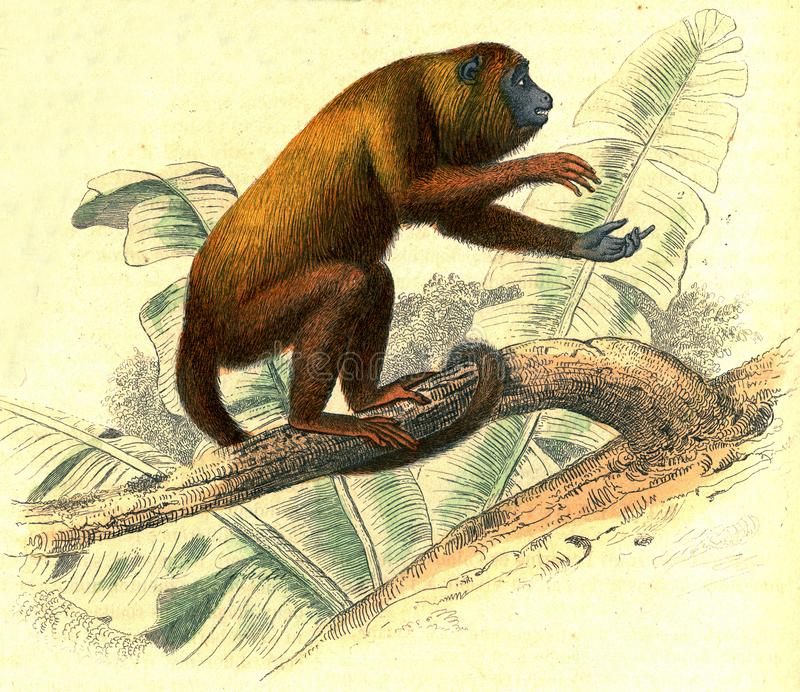
 Of late, rumors of a fresh outbreak of monkeyplague up in the Freeholder lands has caused some small concern among savvy wizards of Wampus Country.  It is believed the monkeyplague is the remnant of a failed attempt by a magic-user from the Time of Apes to create a virulent disease which would turn other humanoids into simians, in a bizarre attempt to stave off the decline of that civilization.


Two things are certain about the monkeyplague: first, that it mutates the infected to a greater or lesser degree, and second, that those who are fearful are far more likely to become infected when exposed to a carrier.


A person who spends more than five minutes or so within fifteen feet of a monkeyplague carrier must make a saving throw against a fear-like effect (depending on your local metaphysics, this could involve resisting enchantment, magic in general, or something to do with your Wisdom).  Bonuses to save versus fear or charm effects apply.  Those who succeed on the saving throw will contract a Minor Monkey Mutation which appears within 1d6 rounds, and lasts for about twelve hours.  Those who fail on the throw will contract a Major Monkey Mutation which will last permanently, or until a combination of cure disease and remove curse is laid upon the victim.  


Humans, dwarves, and halflings can definitely become infected, and will be communicable for around twelve hours.  Simians, orcs, goblins, and so on are immune to the disease.  Elves and gnomes cannot become infected by the monkeyplague due to their faerie ancestry, but can be communicable carriers for twelve to thirty-six hours.


MINOR MONKEY MUTATIONS


1  MONKEYFACE.  Your head shapechanges into that of a small monkey (your choice; may I recommend one of the dapper marmosets?).  Yes, the whole head, so it’s tiny monkey head on your normal human shoulders.

2  MONKEYFEET.  Your feet painfully shapeshift so you have a thumb-toe.  These boots are ruined.  With practice you can do tricks with your feet (like throwing playing-cards into a hat), but you cannot wield weapons or use normal objects with them.

3 MONKEYTAIL.  You gain a semiprehensile tail.  It is insufficiently dextrous to use weapons or tools, but you have +3 on any checks to climb trees.

4 OOK.  Your ears enlarge slightly and grow fur, but you can now understand the tongue of the great apes.  You do not automatically speak it, but have the capacity to learn to speak it.

5 IMPROVISED WEAPONRY.   You instinctively know that you are now pretty ace at flinging poop (+5 to hit if it’s your own scat, only +2 if it’s somebody else’s).

6 HOWLER.  Your throat and lungs overdevelop, allowing you to bellow loudly and be clearly heard a mile away.

7 GIBBON IT ALL YOU GOT.  You gain the ridiculously-long arms of a gibbon, which drag on the ground.  Neither your strength nor dexterity improve.  With your arms and fingers all weird, and these janky elbows, you’re at -2 with all weapons for at least three days if you still have the arms.  

8 BARREL OF MONKEYS.  Over the next 1d10 rounds, you vomit up 1d3 spider monkeys per round.  These are normal monkeys which will scurry off and do monkey things immediately.  If it happens to be a full moon, the monkeys are winged, and fly out of your butt instead.  Either way it’s painful and embarrassing, but you suffer no harm, other than perhaps missing those monkeys once they run off.

9 MONKEYBLINDNESS. Regrettably, all simians, apes, and monkeys are now invisible to you.

10 BANANA STENCH.  You smell strongly of bananas, out to twenty or thirty feet.  Many monsters and beasts will smell you coming, or be able to follow you by smell. 


MAJOR MONKEY MUTATIONS

Victims of any full-shapechange result will thenceforth count as both simians and persons for the purposes of adjudicating magical effects.


1  MONKEYFORM.  You’re a small monkey now.  You can still talk, and use a dagger as a two-handed weapon.  Reduce STR, CON, and INT by 1d8 each.  You probably retain your class abilities, unless a stat drop screwed you over.

2  OLD MAN OF THE WOODS.  You are an orangutan now, with vibrant orange fur and a weird face. You gain a halfling’s ability to hide in the forest.  You may still talk and use weapons & tools normally.  If you happen to be a cleric, increase your WIS by 1 point, Doctor Zaius.

3  HUMANZEE.  You’re now mostly chimpanzee, but still a little human. Once per day you may boost your STR by 1 point for 1d4 rounds.  You can still talk and use weapons and tools normally.

4  HUMANDRILL. You are now a mandrill with a gigantic blue ass that glows faintly even in magical darkness.  You can still talk and use weapons and tools normally, but dating may be problematic outside of a major city.  With sufficient downtime and training, you can teach your gigantic ass to glow different colors in the presence of certain types of creatures (undead, orcs, lawyers, etc).

5 BOON OF THE BAB.  You are now a baboon.  You shed all your class levels and can only speak the tongue of the great apes; however, your Charisma is considered 1d6 points higher by baboons.  Soon you will gather about you a loyal troop of baboons to do with as you please.

6 AMATEUR SIMIAN.  You shapechange-regress into a lemur, bushbaby, or slow loris.  You are subject to the find familiar spell of any wizard within range, the effects of which will remain even if your monkeyplague shapeshift is cured.

7 MONKEY ON YOUR BACK.  You grow a conjoined chimp on your back; you share a spine, a nervous system, and your cardiopulmonary systems are linked.  You feel each other’s pain, and share a single pool of hit points (your current max, plus 2d8).  He is a normal chimp, and wants normal chimp things.  Your clothes and armor probably don’t fit anymore, but since you have a chimp looking behind you all the time, you’re impossible to surprise.

8 PITHEKOTOKOS.  Congratulations, you’re now pregnant with an ape baby.  No, I don’t care what your sex is.  In 1d6 weeks you will deliver a perfectly healthy su-monster which, while still considerate of its relationship with you, is irredeemably evil.

9 OOK-OOK. A slight change to your larynx and lungs, plus instantly-developed instinct, allow you to speak the language of either the great apes (70%) or the small monkeys (30%).  Once you know one, you can spend four weeks’ downtime with the appropriate critters to learn the other.

10  PRAISE HARAMBE.  You are now a noble gorilla, losing the power of speech but boosting your STR and CON by 1d4 points each.  You develop a fondness for kittens, and your alignment shifts one step toward Good or Law, as is appropriate to the campaign metaphysics.


Writes noted wizard The Magnificent Montranto in private correspondence, “It’s only a matter of time before some gang of brigands all infect each other and we have a roving gang of monkey mutants to deal with.”


Saturday, May 21, 2022

Return to the Freakness

 Once again Spring blooms in Wampus Country, and before we know it, it's time again for the running of the Freakness Stakes.  What spectacle!  What pageantry!  What an opportunity to make money or get stabbed in a crowd of drunks!

If this is your first time attending the Freakness, here are a few things you must understand:

* First, the jockeys must ride things which are not horses, and which cannot fly, and which are not man-shaped.  A triumvirate of judges look at each potential entrant, and If Your Steed Too Horsey They Kick You Off The Coursey.  Each running gets a smidge more bizarre; the days of zebras, centaurs, and skeletal horses being allowed on the field were over long ago.  If you find yourself without a more interesting mount and the Freakness is but a few weeks away, consider bribing a pink elephant or capturing a snollygoster - both are classic choices, and generally more easily available than a very-fashionable animated furniture.

* Second, the jockeys who win, place, and show are awarded bizarre magical items as prizes.  Typically these are not particularly powerful, but like many weird enchanted objects, can come in very handy in certain situations.

* Thirdly, whether you win or lose, there is significant prestige in competing and showing off your very weird mount.  If you finish the race at all, some wealthy businessman may try to purchase your steed.

* There is considerable official and unofficial gambling surrounding the Freakness, and not all of it has to do with the race itself.  You can easily get odds on which entrant will be injured first, that sort of thing.

* The Freakness Stakes is accompanied by raucous drinking and shenanigans in the infield, including the famous Outhouse Running Contest in which blotto contestants attempt to race one another across the tops of a long line of outhouses.

* In recent years it's become fashionable to wear enchanted racing livery, as follows.

Racing Livery.  A gaily-colored bespoke silken suit designed for horse-racing, and lovingly emblazoned with runes, glyphs, heraldry, and gang signs best representing the jockey for whom it was made (often a wizard themselves, or a hired halfling).  The racing livery provides a single step of armor class and may not be combined with other armor.  The enchantments on the livery allow the wearer to reroll one racing-related check per day, and provide +1 on the first saving throw made each day.  The gods are inclined to define ‘racing-related’ as including not only animal handling checks, but certain gambling ones as well, so caution is advised.


Prizes awarded at this year's Freakness Stakes include the below:


(Win) Periapt of Early Voting. This platinum pendant bears a worn cameo depicting a mule and a pachyderm in the act of mutual fellation. The wearer of the periapt automatically wins initiative in any non-combat, verbal situation, such as determining who said "shotgun" or "not it" first, or answering questions like "where shall we go to dinner?"


(Place) Epicenter Epee. In all other respects a sword +1 in the form of a fencing blade with a tiny tuning-fork mounted on the pommel, the epicenter epee has one special ability. When wielded against a creature made completely or partly of stone (ie a stone or clay golem, possibly a stone giant, living statue/caryatid, etc), the epicenter epee causes nanotectonic resonance waves in the creature (inflicting a further 2d6 sonic damage with each successful hit). If the epee ever manages to inflict five killing blows on these sorts of creature, the blade will shatter, but the remaining hilt and bell will act as a wand of earth and stone with 1d6 charges which telepathically communicates its command words to its wielder immediately.


(Show) Diadem of the Creative Minister. Placing this jewelled tiara on the brow of an an animal (including a familiar) boosts the creature's intelligence slightly and shifts its personality to enjoy problem-solving. Any critter wearing the diadem will offer fairly decent, out-of-the-box, and possibly terribly honest advice on one problem per day.


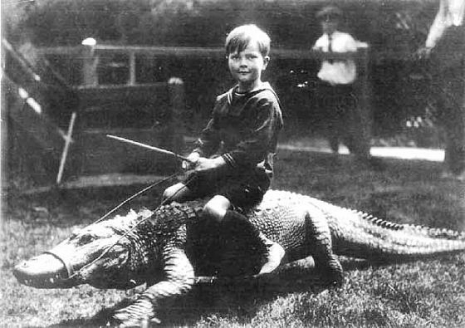
Precocious jockey 'Lil Bill' Onionsocks, winner of the Saltvale Junior Scurry just a few weeks ago, mounted astride his rallygator, Herbert.  Bred for swamp-racing across mixed courses of dry- and wetland, a properly-trained rallygator can be as speedy and responsive as any pony, with the added benefit of a congenital taste for rival children.