Saturday, March 5, 2022

The More The Merrier

 More players means more fun - not just "players at one time", but "players over time" as well.

Although I've run plenty of one-shot con games, twice I broke this pattern and ran more improvised sessions which were linked.  The Saturday session players stomped around an area, and then the Sunday session players were able to experience the influenced area.  The extra layer of organic, emergent gameplay made a big difference!


FIRST ATTEMPT, SESSION ONE

In the first experiment, I threw together some small hexes for players to explore.  I had a few things fixed on the map, including a starting point, and a random encounter table to use - that was it.  For that first session, I ended up with only two players.  All good!  It was important to me to explain to these guys what I was trying to do - first that they could go anywhere, do anything, engage with hooks or not, etc; and second that I had a second session the next day where they could play again or perhaps other players would have a similar experience.

In minutes, we had Philo the Mental Magician (magic-user) and his bodyguard Brute the Barbarous (fighter) ready to go.  I don't remember everything they did that day, but I recall three things.  By pure chance, they encountered the young green dragon on the encounter table - and rather than engage it in combat (smart choice) the PCs attempted to parley.  A young dragon might have an incomplete understanding of vernacular common...

"Who am I, you ask?  Foolish tiny bipeds, with your membrane-less eyes and backward walking-arms, I shall tell you who I am.  Know that none may withstand my power, none may suffer through it and survive!  Know also that my poisonous breath-clouds will squeeze the life from the lungs of even the mightiest with great expertise!  Therefore, among Man, I am to be known as The Insufferable Choke-Master!"

There was a lot of pandering to the dragon, of course.  I am very grateful that Philo's player did a whole line of Puss-In-Boots questioning about whether the dragon was mightier than This or could he kill That with his breath weapon, finally ending with Philo asking if the dragon were sufficiently mighty to kill himself with his own breath weapon...which allowed me to deliver the line "What an amusing philosophical question!  I confess it would give me great pleasure to choke myself!"  Philo fast-talked the hell out of that dragon - learning about a nearby giant in the process - and thankfully the Choke-Master flew off.  

Later there were some magical garden gnomes who the PCs turned on - the gnomes set to work building a magnificent garden with a brick wall around it.  Brute and Philo were content to leave them to their work.  

Finally, I remember they ended the session by locating the tower of Montalba the Giant, tussling with some of his Very Large Guard Dogs, and ending up having supper with the magical Rackham-styled giant and taking a job as his procurers, since he himself could not leave his castle lest he lose his powers.

All in all, a solid session - some laughs, weirdness, peril.  To prep for the second section, I removed the mountain lion they'd killed from the encounter table, and instead replaced it with an entry of "Philo & Brute on errand for giant".
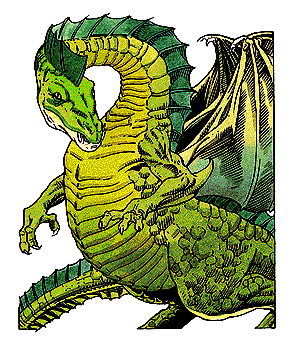
Kneel before the Choke-Master!


FIRST ATTEMPT, SESSION TWO

The next day I had five fresh players, several of whom were kids - this was fine, I'm no stranger to running for kids.  This crew elected to take pregens rather than make their own characters, which was a good thing since none of them had played B/X before.  It didn't take long for us to have a pair of fighters, a dwarf, and a thief exploring the hexes.

I don't remember most of what they did that session - shame on me and my note-taking skills - but I do remember that the dice gave us the green dragon again.  This was unexpected but awesome - the dragon was willing to talk, but his opinions and goals were shaped by what Philo had told him (all lies of course) the previous session.
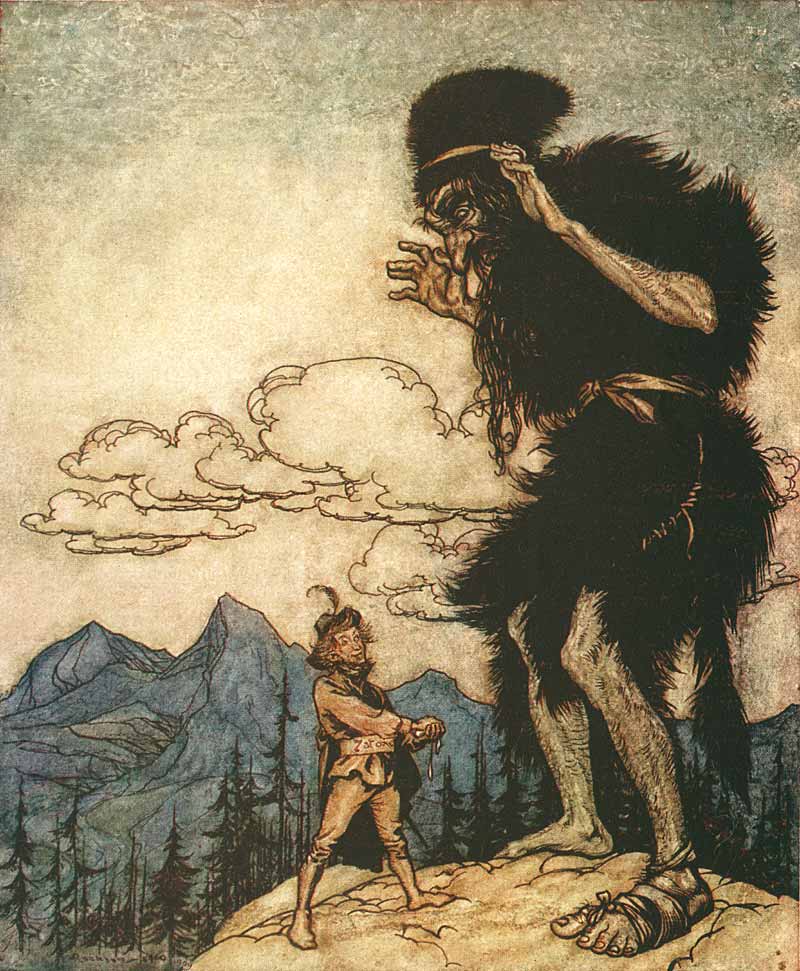
I charge you to quest for some rich, Corinthian leather


SECOND ATTEMPT, SESSION ONE

A couple years later I tried it again, this time for a pair of sessions which I'd advertised as "B/X for kids".  In this case I didn't use little hexes, I just had a small map with a village, forest, and river, and I ginned up a couple problems to solve seeded in the area, figuring very new players might benefit from something straightforwardly heroic.

My players for this session were three girls, all friends, who I think were eleven or twelve, or some combination of the two.  From the pregen stack, they ended up choosing two fighters and a thief; one of the fighters was definitely the stronger personality and became the de facto leader of the group.  Off they went!

One of the main things I remember them doing that session was dealing with a reputed monster (or maybe one NPC thought it was a haunting) that had been troubling the farms on the outskirts of the village for several days.  There were reports of a monstrous figure with an immense black head, bellowing as it thrashed through the woods, occasionally lurching onto farm property and breaking things.  The PCs interviewed a farmer, the usual stuff, then headed into the woods in pursuit of the thing.

Before long they found the creature bumbling about the woods, and they realized it was a stupid ogre with his head stuck in a cauldron.  They immediately fell to deciding what to do next.  Leader Girl wanted to engage the ogre and slay it for the glory and possible reward.   Second Fighter wondered if they could help the ogre, thorn-in-paw style, and maybe make friends with it.  And the thief reasoned that the ogre would probably starve to death in the next few days anyway, so why not follow it around at zero risk til it falls over dead, then claim credit?  Note carefully that all three of these are classic PC courses of action!  

In the end, they went with fighting the ogre.  Once it was slain, they removed the cauldron, saw some magical writing inside and realized the cauldron probably belonged to that witch the villagers had been talking about... so one thing led to another and returned the magic cauldron and did some work for the witch to round out the session.
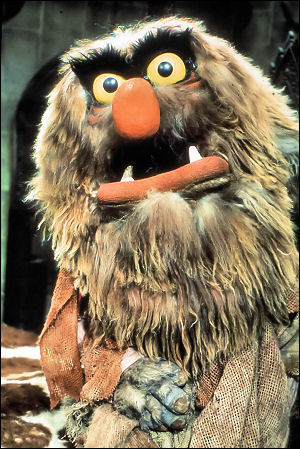
Another possible ally brutally murdered


SECOND ATTEMPT, SESSION TWO

Based on what the girls had said the day before, I didn't expect them back for the Sunday session, but thank goodness I kept the characters, because they came back, and brought a fourth friend!  We were also joined by two boys, so the party now consisted of two fighters, two thieves, a cleric, and a dwarf.  Not too shabby - rolling deep and ready for adventure.

This time around, we saw how engaged PCs drive the action.  Leader Girl knew immediately what the group should do, and it was simple: take all of the cool stuff they'd seen in the witch's cottage, either by slaying the witch outright, or coming up with a plan to steal from her when she wasn't home.  A natural PC, this one.

What followed was a great improvised session involving casing a witch's cottage, trying to figure out her schedule, distracting a witch, and eventually six low-level PCs trying to rapidly loot a witch-cottage in which most of the utensils were animated, gravity was inverted if you walked up the wall confidently, and various weird but minimally-perilous critters were about (some in cages).  It was a Baby Yaga's Hut thing, you might say.
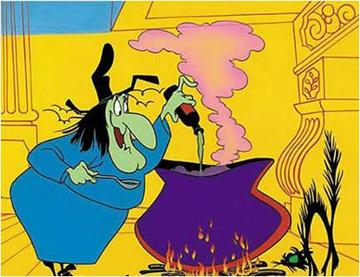
When all your players are 12, you can just steal Witch Hazel as the NPC and they will never know


As the witch returned from gathering potion-components, the players panicked.  They didn't really want to tangle with the witch -- so they tried to put things back the way they were (poorly).  The thief from the previous session remembered the witch mentioning that the writing in her cauldron was to protect her when mixing potions, so she very quickly messed with the writing - I can't remember if she added a stroke in paint or erased a stroke using the cleaning supplies they'd found in the witch-kitchen.

Anyway, the witch returns, the PCs play innocent, witch kicks them out for messing with her house.  The PCs pull back to a safe distance and watch, seeing the witch making her potion through the window...   but without the protective qualities of the cauldron, something goes wrong, there's a small explosion, and the PCs run in to find one dead witch with her face melted off.  The wishing-ring on her knobby hand seemed intact, though...

We ended the session talking about how they could use the three wishes in the ring in a way that would benefit all six PCs with relative equality.  Suffice it to say those characters are still around somewhere on the map, each with a magical mount and weapon.


FOUR YEARS LATER a different group of regular PCs come across the sprawling, topiary-filled garden built and maintained by animated clay garden gnomes.  They did not run into the giant Montalba or the green dragon, but they were around and encounterable.
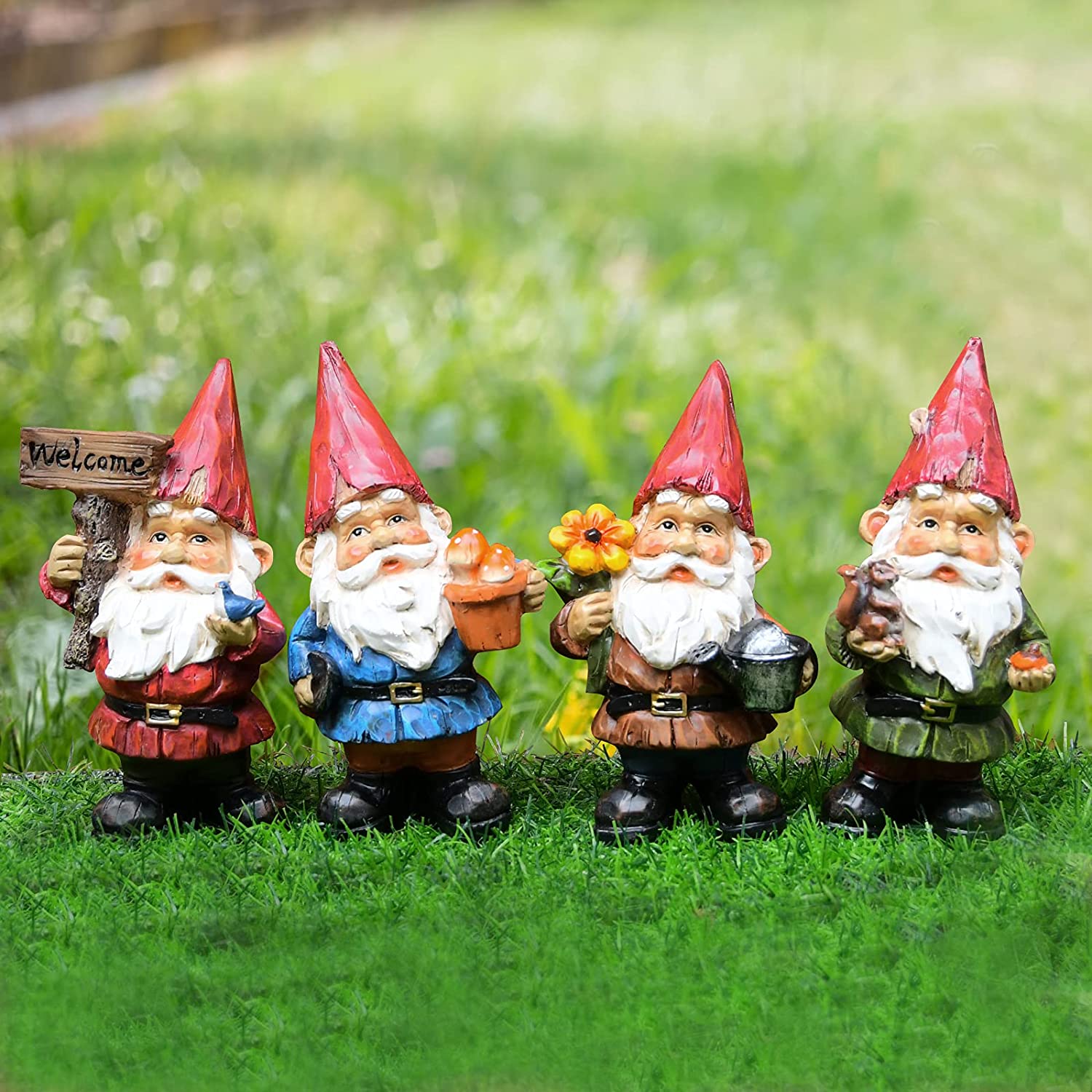
The garden had become a fully-functional garden gnome-scale town, with a tavern, general store, barbershop, and surprisingly-classy bordello that the PCs refused to visit


LESSONS LEARNED

Don't stop running your campaign.  If you're doing a con game, it should be part of your campaign (even if it's a module), building on what you've already done, and then feed back into the ongoing campaign.  Run every session like it matters, and then LET IT MATTER.  Let the PCs affect the campaign and setting and put things on the map (or remove them).  That's a living world.


Saturday, February 12, 2022

Considering Patrons

A living D&D campaign works better with multiple Factions and Patrons in it.  No, not Warlock Patrons.  We’ve alluded to a couple of those during the 5e Wampus sessions, but that’s not what I’m talking about today.

The Patrons are NPCs (or maybe not, as we shall see) who are the individual movers and shakers in the campaign world.  Monarchs, wizards and witches, barbarian chieftains, wealthy sponsors of expeditions, and so forth.  They keep the living game world moving around.

The Factions are the groups that interact and overlap within the campaign.  The Duchy of Whoopass, the slavering hordes of goblins on the western steppe, the thieves’ guild (shhh), the churches of note. 

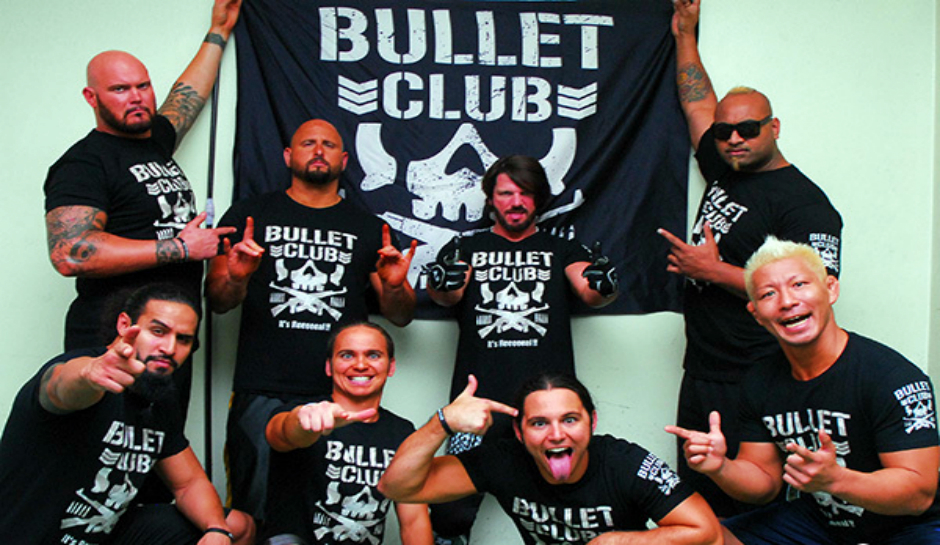
Like wrestling, D&D works best with factions.  Maybe not this one.


Patrons may be people of rank in Factions, or they may be individual wild cards.  Regardless of their alignment (big-A or small-A), the Patrons and Factions have goals, and they must pursue them - that’s what keeps things moving and gives the world events for the PCs to stumble into, aid, thwart, or exploit.

Just one of many quest-givers

When I was regularly running Wampus Country sessions back in 2011-2015ish, there were definitely some factions and patrons in the game, but probably not as many as there should have been.  Or rather, they should’ve been more active.  There were plenty of NPC groups - various flavors of tribesmen, for example - that appeared occasionally but did not always have their own motivations and goals that existed and marched forward between on-camera sessions.  That was a mistake on my part, and I think it was driven somewhat by the narrower focus of the PC action much of the time, and just having too much going on to apply good discipline to each faction.  I was not diligent in saying each month “okay, what are the Black Eagle tribe up to right now?”  In part I was able to get by without doing this because I felt very comfortable improvising the answer to that question should a Black Eagle have shown up in the campaign the next week.  Improv is good for some things, but having an actual answer from actual faction actions would’ve been far better for the game, its verisimilitude, and the general “embrace the chaos” nature of better play.

In hindsight, that stretch of the campaign would’ve benefitted greatly from using Patrons in the “Chantisonian” mold (a cheeky portmanteau of Chanticleer, the guy who brought this up in the last year or so, and Dave Arneson, who was doing it Braunstein-style from the jump).  Check out this explanation of the concept over at BDubs And Dragons.  Bottom line is the Patron is an NPC, of whatever power level, that you don’t run yourself as DM, but instead hand off to a player - and probably not a player of a PC in your game to start, although it could be.  It's about recruiting some more players to play the movers and shakers of the region.

More players means more chaos.  More inputs you can’t predict.  There’s a fog of war, of course, since the patrons may not have perfect information (and shouldn’t).  There will be actions and counteractions, and friction will be generated that enhances the campaign world and the gameplay.  Plus, it’s a fine way to get some people involved in your campaign who otherwise might not have been able to play.

As PCs in your campaign rise in level, they start to seem more like the NPC Patrons - in addition to their own direct effects, they can farm tasks out to other PCs, pit people against one another, and so forth.  It sounds so fun, and although it could be argued it adds more DM work to adjudicate things, I suspect it alleviates a completely different kind of DM work, and in the end is a net gain in both efficiency and campaign fun.

One reason we may not have leaned into wide-scope faction play in that phase of Wampus Country was that the world at the time, while not exactly in stasis, certainly wasn’t on the cusp of war or anything like that.  Plenty of wilderness to explore, but it did feel too much like peacetimel  

IT'S A WARGAME

On returning to Wampus Country with a new group in late 2020, we placed the action in a different part of the map, where we could indeed be on the cusp of war.  Had I added embodied patrons at that point, the sessions would have looked very different than they did.  I’m still thinking about where I would add patron play to Wampus Country, but I’m definitely eager to throw some patron players into the mix when I run Gamma World in 2022.

Next time on the blog, we’ll get back to talking about stealing play structures from comic books, but some of this Patron stuff will play into it, so I wanted to be sure to discuss the concept and drop that link first.

Monday, October 11, 2021

Learning About D&D From Comic Books, Part One

 CAMPAIGN STRUCTURES BASED ON COMIC BOOKS


There are many different ways to structure a roleplaying campaign - number of players, frequency of play, flow of in-game time may all vary from table to table.  However, there are lessons to be learned regarding getting what you want from your campaign.  It may be helpful to look at models from outside of D&D to think about campaign structure in new ways.  For the purposes of this post, I’m using “campaign” in the modern sense - a series of game sessions - not in the classic “campaign = gameworld regardless of who’s playing in it today” sense.  We’ll come back to that later.


Let’s look at superhero comics.  Comic books run the gamut as far as genre and theme; some feature a single hero, others a large group of heroes.  If we break down “kinds of superhero comic” based on membership and flow-of-time, and look at it as a series of D&D adventures, some patterns emerge.


The categories:


TEAM BOOK, MINOR LEAGUE.  A group of PCs who only adventure together, never solo.  Membership may change over time, and the group might temporarily expand or contract.  The adventures are generally serial and without pause, as the heroes have nowhere else to be and don’t exist outside of the team adventures.


TEAM BOOK, MAJOR LEAGUE. (Avengers, Justice League, Fantastic Four)  A group of PCs who adventure together; some PCs may have solo adventures outside the group, others perhaps not.  Membership may change over time, and the group might temporarily expand or contract.  The adventures may be serial or more episodic, in part because some members may be elsewhere having separate adventures.


THE “NON-TEAM”. (Defenders) A group of PCs who each have their own solo adventures, but come together periodically to address a shared threat or mission greater than any one of them could tackle.  Guest stars may be common.  Adventures are typically episodic, and as one chapter ends, the PCs split up again, only to reunite again at a later date to address another issue.


THE SOLO. (Most superhero comics!) A single PC has adventures in serial or episodic format.  The solo nature of the narrative produced allows for more time spent on friendly NPCs, romantic entanglements, personal problems, and the like. 


THE DUO/PARTNERSHIP.  (Power Man & Iron Fist, Hawk & Dove, Cloak & Dagger) A pair of PCs work together.  If the PCs share a theme or origin, the majority of their adventures will be related to that theme.  If the PCs are themed to different subgenres, typically the adventures will sometimes favor the background or disposition of one PC over the other, and sometimes the adventures will be against a new/shared foe or threat.


THE TEAM-UP BOOK. (Marvel Team-Up, Marvel Two-In-One, The Brave & The Bold, etc)  Basically a rotating duo book.  A main PC teams up with different other PCs, usually one at a time.  Only the “main” PC is constant, although the “guest star” PCs may return periodically.  Adventures are typically episodic, and may be themed to a subgenre or location more appropriate to the guest star than to the main hero.  (ie when Spider-Man teams up with Doctor Strange, you’re getting a mystical adventure; Strange isn’t showing up just to help Spidey punch the Scorpion.)


THE CROSSOVER.  Two or more of the above structures overlap for a limited time, usually with a single goal or mission, or united against a single threat.  In many cases the PC groups will temporarily clash before uniting.  Often the PCs will be forced by circumstance to split up into smaller groups, each one combining members of the two different teams.


As we look at these structures, we have to ignore the relative power levels of the superheroes as we understand them, since we’re talking about D&D and not some narrative system where Superman and Robin have the same value.  However, as stand-ins for D&D PCs who may or may not have different kinds of adventures, they work if you squint. We'll look at a few of these more in depth in later installments on this blog, especially talking about using alternate campaign structures like the solo and duo, and thinking about crossovers.


Most D&D campaigns are, by this diagnostic system, “minor league team books”.  The PCs have adventures together, and are never adventuring apart.  Membership changes when a PC dies, a player leaves or arrives, or there’s a strong organic need for somebody to swap characters. This is certainly the way I played throughout most of the 1980s and 1990s - perhaps you did as well - and it has become the default playstyle.  It’s to the point now that this playstyle also seems to presume that the PCs all sit at the same power level and advance together, not only because they’re always playing together, but because the mechanics of the game ramp everyone up at the same rate more or less, and it’s become a goal of play to maintain that.  Remember that for a moment.


Most of these campaigns are not only closed in terms of participation, but sealed in time - once they’re over, they’re over.  Characters from this story may show up later in another story, but generally each campaign is considered separate, perhaps even taking place in a different world, or - because they are run by different DMs - considered to be not in continuity with one another.

Campaign setups with fewer players can and do work just fine - the duo, the solo hero, and so forth.  In most cases those campaigns are also closed and sealed, as above.  So long as these are the default playstyles - closed, sealed - campaigns exist in their own bubbles and rarely affect one another.   


Let’s return to the xp question.  In your “standard” team book campaign, everybody earns xp together.  Maybe somebody falls a little behind because they missed a session, or maybe everybody is marched forward by milestones regardless of participation.  These kinds of setups tend to have the assumption that everybody is the same power level, everybody shares the major goals, and everybody will advance (roughly) at the same rate.  Any other campaign structure will break that assumption, as PCs will definitely be gaining xp at different rates (Thor has his own comic, so he earns xp solo and when he’s doing Avengers stuff; the Black Knight doesn’t have a solo comic, so he’s only earning xp during Avengers comics).  You could do something different with this, and have Spider-Man gain xp at a greater or lesser rate depending on whether he’s teaming up, but let’s not go there today -- it’s needlessly complex and we’re only talking about some basic concepts here.


A classic old-school, or wargame-style, playstyle breaks all of this in a couple different ways.


First, the assumption that there will be many PCs/players, and they will not advance at the same rates.  The more you play, the faster your PC advances (presuming survival of course!).  The open table concept falls here - you’ll have players who only show up once, and that’s okay, and what their PC does that night is just as canon as anybody else’s actions.


Second, the assumption that the world moves on at a steady rate regardless of your participation.  In some cases this is down with “1:1 time” (the benefits and drawbacks of which are better explained elsewhere), or in some cases it’s just “we play on Fridays with or without you”.  The clock doesn’t stop because your players did, because you don’t just have these five players!


Third, player-driven action means that PCs can recruit one another for particular needs.  When Spider-Man needs help fighting vampires, he calls Blade, because even though they don’t regularly hang out, they know each other from a previous team-up (or a friend of a friend!).  Similarly, if there’s a temple full of undead that the regular PCs can’t crack, why can’t they call every cleric and paladin they know and ask them to show up for a special sortie?  In the classic campaign structure, they can, and they should!


The good news is that this kind of structure opens things up considerably.  Imagine if your world moves forward on its own and is not beholden to the whims of a single group of (fickle!) players.  Perhaps you have a regular Friday group (your Avengers), but also run on other nights...like so:


  • Regular in-person game with PCs A, B, C, D, and E

  • Online side-game (duo style) with PCs F and G

  • Occasional online sessions with PCs B and E (the ranger and the druid, off doing elf-focused nonsense, let’s say)

  • Solo in-person game with PC H

  • That slow-moving play-by-post with PCs J, K, L, and M

  • That con game you ran last week with PCs N, O, P, Q, and R.

  • Don’t forget your previous regular game from five years back: PCs S, T, U, and V.


If all these games are in continuity with each other, and mapped meaningfully to a calendar, you’ve managed to be not only an exceptionally busy DM, but the master of a living world.  It doesn’t matter that most of these PCs may not interact with each other.  They could.  It’s allowed.  Nobody’s stopping you.


When that play-by-post is over, run another and invite a different mix of folks.  Invite the con players to bring their new convention PCs to your online game.  Invite the guy from the solo game (H) to sit in on the regular game for a couple sessions.  Mix and match.


The campaign is not ‘Avengers vol. 1’.  The campaign is ‘The Marvel Universe’.  A story ends, but the campaign doesn’t.  A group fizzles, but the campaign doesn’t.  A living world style of campaign is resilient and cannot be torpedoed or killed by a playgroup folding, a DM moving to another state, or the arrival of a time-dominating child.  The campaign continues on, so long as people are playing in it.  


More players = a more resilient campaign.  Actually, I’ll go one better - more players means an ANTIFRAGILE campaign, where stressing the system makes things BETTER because of things that emerge via real play.  If you’re not familiar with the various mappings of the social network of the Marvel universe, search ‘Marvel social network’ and check it out.  More players, more players.  If I were to give generic advice to spruce up any D&D campaign, it would be “play more, with more players”.  It’s just that simple.


As we move on through this series of posts, we might have a lot of "thoughts" and few "answers", but that's okay. Future installments will discuss solo & duo campaigns, running team-ups and crossovers, getting someone else to be your Doctor Doom, and beyond.


Friday, September 3, 2021

Critter Gitters: Into the Desert

 We had a pause in the Critter Gitters game back in April.  Not a pause in the game-clock, mind you, but a series of events that snowballed and led to us not playing for a couple months in a row.  Thankfully we're now back at it with some regularity - having a periodic, nicely-scheduled game night is healthy, and keeps the campaign ticking forward in a meaningful way.

So, what's been happening since the sky giant nonsense and the Christmas episode and the housekeeping?

First off, the Gitters walled off the access to the catacombs where the ghouls were, then promptly forgot about the whole thing.

After a short "summer break", the Gitters reconvened in the town of Bitter Luck and decided - mostly Hogan and Pips leading here - that an expedition into the Devil's Desert, to seek the lost Potbelly Mine, would be worthwhile.  If they located and claimed the abandoned silver mine, surely they'd be wealthy; and the trip itself would yield critters and weirdness and things to explore.  So they spend hard-earned gold on some wagons and gear and a ton of food that should last the trip, figuring they'll be gone for several months (and will need to hunt along the way, too).  Oregon Trail time!  Save versus Dystentery.

Now because this group is explicitly drop-in/drop-out, we're basically saying that all the current Gitter PCs are on the expedition, and whoever is playing that night gets to do the "away team" stuff like investigate the weird lights on the horizon, or delve down into that howling cave, etc.  But everyone is assumed to be around, and if for some reason they get in a "lost in the desert with no food" situation, that'll affect every PC.

There's a lot of critter gittin' the first session as they play out plenty of overland travel.  Jossshua the lizard wizard captures a giant frilled lizard and loads it, hogtied, into one of the wagons.  It was a whole thing.

One night their camp (circled wagons and all) is infiltrated by a winged monkey who tries to set the Conestogas alight.  Luckily, recently-promoted roustabout Warwick (ie a new PC) is on watch, and his keen eyes spot the simian arsonist, and he blows the monkey away without hesitation (killing the thing outright thanks to a good roll - there will be no limping off into the darkness for this monkey).  Now the PCs are worried about winged monkeys as a desert threat, and they muse aloud about the thing's intelligence, and was it acting under directions.

During the next day's travel they locate an old stone temple half-buried in the sand, and send a team inside to investigate it.  They best a couple lesser mummies, mess with a trap and a secret door, find a bottomless pit with some THING in it...   and locate the living-space of whatever wizard-priest had been living here - probably the monkey's master, based on the widdle monkey beg and spare fezzes - before they busted in.  They conclude, rightly, that the nefarious caster escaped through the now-shattered magic mirror.  The Gitters collectively shrug, then set to work hauling a golden statue out of the place.

Those of you familiar with X4 Master of the Desert Nomads may recognize that temple (albeit with some changes).  The desert the Gitters are traversing has been seeded with locations and stuff from X4 as well as X5 Temple of Death, so there's the potential that they'll run into more of this stuff, particularly if they seek it out.


Thursday, August 12, 2021

On the Workbench

 I have a couple projects I'm working on, all at various stages.  I hesitate to presume which one will be complete first, as that isn't really how my brain works - I hop back and forth as inspiration dictates.  Here's a preview of what's (probably) coming:

Travel Guide vol 2 (name in flux).  A sequel, format-wise, to Lumberlands.  This one focuses on a mountainside retreat where wizards go to have their (debauched) conventions.  If you want to spend a week in a casino town full of tipsy magic-users (who all hate each other, have secrets, know spells you don't, and are probably worth stealing from), this is the place for you.  This mini-region is probably also a good place to drop all the "set in a wizard's tower" adventures you keep meaning to use, but don't.  Just like Lumberlands, this one should have plenty of inspirational NPCs, random tables to help you run on the fly (including for wizard generation), and more adventure hooks than you can shake a wand at.

Working on the wizard stuff makes me feel like the Arcane Abecediary needs an update, probably including a bunch more wizard-y stuff (Wampus Country Wizardry seems a likely omnibus title).  Getting this updated, expanded, stuffed full of art, and in print would be a pretty stellar thing.

Travel Guide vol 3 is about an enchanted forest full of ravens and unseelie fae and things who are the gangs/factions (The Warriors is an over-the-top inspiration here), and exists now primarily as a sheet of paper with a bunch of ideas on it.   I think a drop-in fairy forest would have some use in many campaigns.

Based on percentage of completion, the thing that's likely to see the light first is Poggle Hollow, a quick-and-dirty mini-hexcrawl about nasty little dog-men, and inspired by our own (quite stupid) dogs.  This one will be a very basic pdf with some illustrations and maps by me.  I'm telling myself I can get this out the door in September.

A long ways off is something collecting the bits and pieces I've been using in the current iteration of Wampus Country with the "Critter Gitters" party - the badlands town of Bitter Luck, and developed versions of some classic blog content like Massacre Mesa and Buzzard Gulch.  I think it'd be fun to take all that stuff at some point, polish it, and put it out there with notes from the actual campaign.

Friday, May 28, 2021

For the Birds

During the shopping season that follows Thankstravaganza each year, a handful of newly-available items tend to become fashionable and highly sought after by the wizardly community of Wampus Country. Perhaps it is some construct, or an item of clothing, or a rare and chic familiar; other years the prize is an unusual foodstuff or beverage, or garish knick-knack. As trendsetting wizards go, so go the idle rich, the haute frontiersman, and so on, trickling eventually down to the common man, who often manages to score a cheap knock-off of the trendy item the following winter. Some years the pursuit of, and competition for, the desirable "get" has reached a legendary level - consider the tiny peach golem companion 'Tickle Me Momo', which fetched hundreds of dollars per plushie on the black market until it became common knowledge the 'stone' at the center of each giggling peach was in fact an abyssal shard. Adult wizards today also likely recall the fad for cabbage- and lettuce-kin of their youth forty years past. It seems each generation of wizards rediscovers the obsession with talking produce. 

 A few years back, the desired enchanted item was not a construct or summoned creature, but an unusual set of clothing: the so-called 'hoot suit'. This coveted clothing made the mad wizard "Hoot Suit" Rawlson famous, and he raked in sufficient moolah that year to build his palatial castle, The Rillerah, on the southern shore of Shining Lake. To make the suits took no little skill, and a good bit of material, including feathers from both giant owls and wild owlbears, the difficulty in procurement of said hoot-parts limiting production severely. Each hoot suit was slightly different in appearance, but they all shared certain characteristics - a feathered union suit with a hood decorated to look like the face or beak of an owl (the 'hoot snoot'). When kept clean and in good order (no mangy patches of missing feathers, for example), the Hoot Suit conferred upon its wearer the ability, once per day, to transform into a normal-sized owl for about a minute, simply by uttering the suit's command word (itself stitched inside the suit). Now a daily transformation such as this has its value - in escaping uncomfortable situations (like an unforeseen melee, or the arrival of Aunt Agatha at one's doorstep) or allowing explorer-types an opportunity to reach places to which they could not easily climb. Yet the real value of the Hoot Suit became apparent when someone - presumably a wizard - realized that by intoning the command word backwards, they could transform into a fully-grown owlbear, for five minutes or so, once per week. The fact that the 'owlbear mode' exhausted the suit's power for seven days thereafter was not seen as much of a disadvantage. 

 Soon everyone wanted one of Rawlson's creations. The price climbed. The black market resellers gouged. Things got out of hand after several weeks, and Rawlson himself delivered a wagon-full of his wares in River-Town, and declared them the last. The news was not taken lightly - fights broke out among shoppers, and spilled into the streets, drawing rival gangs into the fray. The Hoot Suit riots lasted nearly thirty-six hours, leaving scores dead, buildings torched, and Rawlson himself missing a foot (which may, to this day, sit in the belly of the wizard who chomped it while in owlbear form). Hoot Suit Rawlson retired, finished building his castle, and perhaps today continues research into owl-related magics.  Rawlson is a known rival of 'Thunderbolt' Black, who often mutters his name resentfully.

A typical Hoot Suit.

HOOT SUIT
 enchanted clothing 
 Appearance: a brown-feathered union suit. Rumors persist of a prototype "snowy hoot suit", white-feathered, which has the usual powers but also provides resistance to cold. 

 Powers and qualities: 

 Owl Form. Once per day, the wearer may transform into a normal owl for one minute by saying the command word. The suit can provide only one transformation per day, even if you later take it off and hand it to another party member. Nice try.

 Owl-Bear Form. Uttering the command word reversed will transform the wearer into an owlbear for five minutes. This power cannot function if the owl form has been already used that day, and it exhausts the suit for seven days. 

 Give A Hoot. The Hoot Suit cannot function if it is damaged or soiled in any way. 

I know she seems cute and all, but she does puke up pellets on occasion, so YMMV.


 BONUS SPELL from "Hoot Suit" Rawlson's bird-themed spellbook 

 Parakeet Paraclete (lvl 2). Summons a small parakeet, lorakeet, or budgie which speaks eloquently and has considerable training as a barrister. When the bird appears, it knows the local legal system and can sufficiently read the mind of its client (who need not be the summoner) to understand the charges at hand and supply a reasonable defense or, if the client is the plaintiff, mount a strong argument. The parakeet tarries up to two hours, enough for a hearing before a judge, surely - then disappears. Re-casting will summon back the same bird so it can pick up where it left off after a continuance.  If at any point a mirror is nearby, the parakeet may become fascinated with its own image and unable to continue its litigation.

Saturday, May 1, 2021

Reskinning Saves for Fun & Profit

 I'm not the first person to do this - not by a long shot - but when I wrote up the pregens for ScrumCon, I elected to change the names of the saving throws.

On the surface, this seems a no-brainer for anybody who's throwing genre-emulation house rule attempts at a wall to see what sticks.  Surely the saving throws should be against whatever the common threats are; or, to put it another way, reading the list of saves should tell you something about the campaign.  Why wasn't this more common during the G+ OSR bloom?

I think it's a fun conceit and I'm going to stick with it for a while, but there are some reasonable precautions that must be taken.  I can't rename saves willy-nilly; or rather, I shouldn't rename a save in a way that changes the things to which it applies - not without some thought.  It's all well and good to rename 'Dragon Breath' (or 'Breath Weapon' if you prefer) to something better suiting your campaign as a hit of flavor, but that save still needs to be something a thief would be good at.  Otherwise your save numbers will start to make less and less sense as the PCs go up in level and get a little more differentiated from another.  Also, we should be cautious that a save that previously got used a lot doesn't become a rare save just because of the name change.  This is all an experiment, and we have to acknowledge that experiments - especially house rule experiments, and double-especially ones that seem Very Clever Indeed - can fail.  We must be vigilant for that failure and be willing to repair!


Accomplished wizard the Phenomenal Phopp and his peacock familiar, Xerxes, desperately try to remember which saving throws they're good at this week.


Old Saves vs New Saves for Wampus Country

Death Ray & Poison is now Horrible Death! encompassing poisons, death rays, any convenient save-or-die type effect, and Obvious Death Magic.

Magic Wands is replaced by Dark Science!  which includes weird technology, magic items and artifacts, any cosmic tech surrounded by a nimbus of Kirby dots, Elder God Cthulhoid Nonsense, and probably psionics.  PCs in Wampus Country don't have psionics, but a visiting brain-eater might.

Paralyze/Petrification is now Marvelous Transformation!, something that happens in Wampus quite a bit.  If we're turning something into something else by any means - spell, curse, faerie glamour, gorgon breath - this category applies.

Dragon Breath is Legendary Peril! which as of right now probably includes not only breath weapons, but other massive or storied attacks of legendary creatures as well.  When that mountain giant throws a house at you, you use Legendary Peril to dodge.  Grumpy whale with a clock in its side tries to swallow you whole?  Legendary Peril.

Staves/Spells is now Uncanny Sorcery!, covering all spells and magical effects not from other sources.

Will this breakdown work for my B/X games?  Only time will tell.